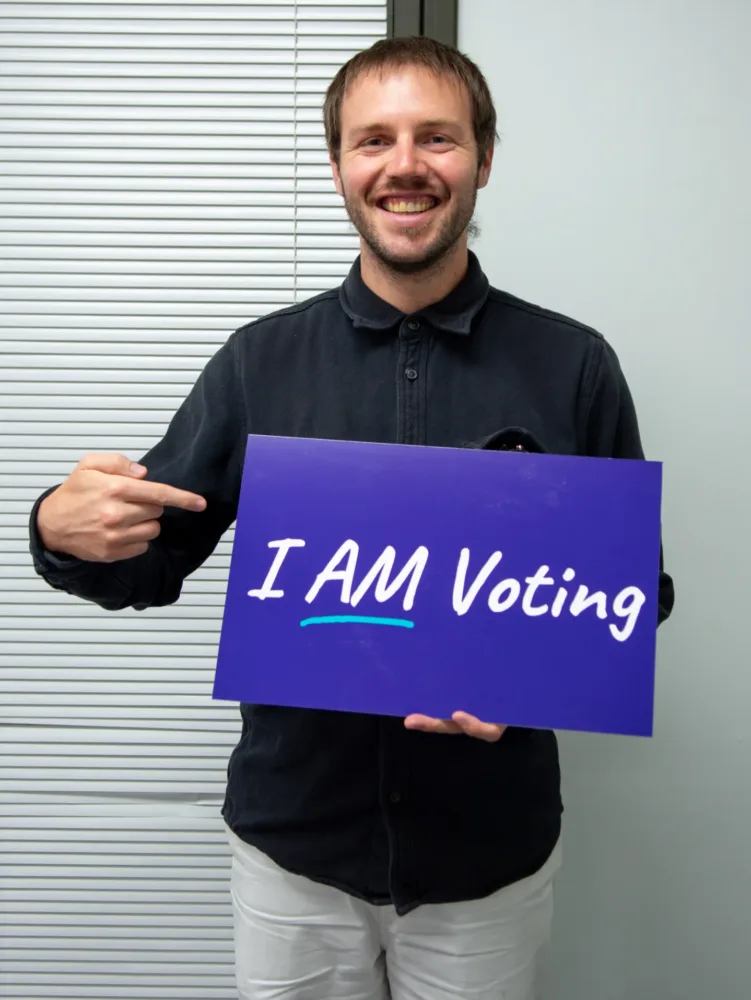
 On October 17, 2026, it is time to vote in your local general election.
Local elections are about the kind of community we want to live in. The people we elect make decisions about our homes, neighbourhoods, schools, and community services.
These local elections include elections for:
- mayors and municipal councillors
- regional district directors
- school boards trustees
- specified parks boards
- local community commissions, and
- the Islands Trust.
For people with intellectual and developmental disabilities and their families, voting is an important way to have a say in their community.
Housing is a local issue
Everyone needs a safe, affordable, and accessible place to call home.
People with intellectual and developmental disabilities should have the same choices as everyone else. This includes choosing where they live, who they live with, and being part of their neighbourhood.
Local governments make decisions about where and what kinds of housing can be built. They can help create more affordable and accessible homes. They can also help make sure homes are close to transit, services, jobs, recreation, friends, and family.
Ask candidates:
- How will you create more affordable and accessible housing?
- How will you make sure new housing includes people with disabilities?
- How will you make it easier for people to get to transit, services, and recreation?
- How will you include people with intellectual and developmental disabilities in housing decisions?
Inclusive schools build inclusive communities
In local elections, we also vote for school trustees. School trustees make important decisions about schools and students.
School districts will also have an important role in growing child care in B.C. Child care should include children with disabilities.
Students with disabilities should be welcomed in their neighbourhood schools. They should learn in classrooms with their peers.
Students need the right supports to learn, take part, make friends, and prepare for life after school.
Ask school trustee candidates:
- How will you make child care more inclusive in our school district?
- How will you make education more inclusive?
- How will you make sure students with disabilities get the support they need?
- How will you listen to students with disabilities and their families?
- How will you make sure every student feels welcome, valued, and included?
Ask questions. Make your choice.
Candidates need to hear from people with intellectual and developmental disabilities, their families, and supporters.
You can go to an all-candidates meeting. You can send an email or ask a question on social media. You can also talk to a candidate who comes to your door.
Before election day, find out where and when you can vote. You can also find out what help is available to make voting accessible.
The Voter’s Guide to Local Elections in B.C., 2026 can help you learn about voting.
You can ask someone you trust to help you understand information about candidates or voting.
Getting help does not mean someone else gets to decide how you vote. Your vote is your choice.
Housing and education are both about belonging.
We need communities where people have affordable homes, students learn with their peers, and people with disabilities have a say in decisions that affect their lives.
Learn about the issues. Ask candidates questions. Make your choice. Vote for the community.
This article was featured in our monthly newsletter, Inclusion in Action.
Share this with your network: