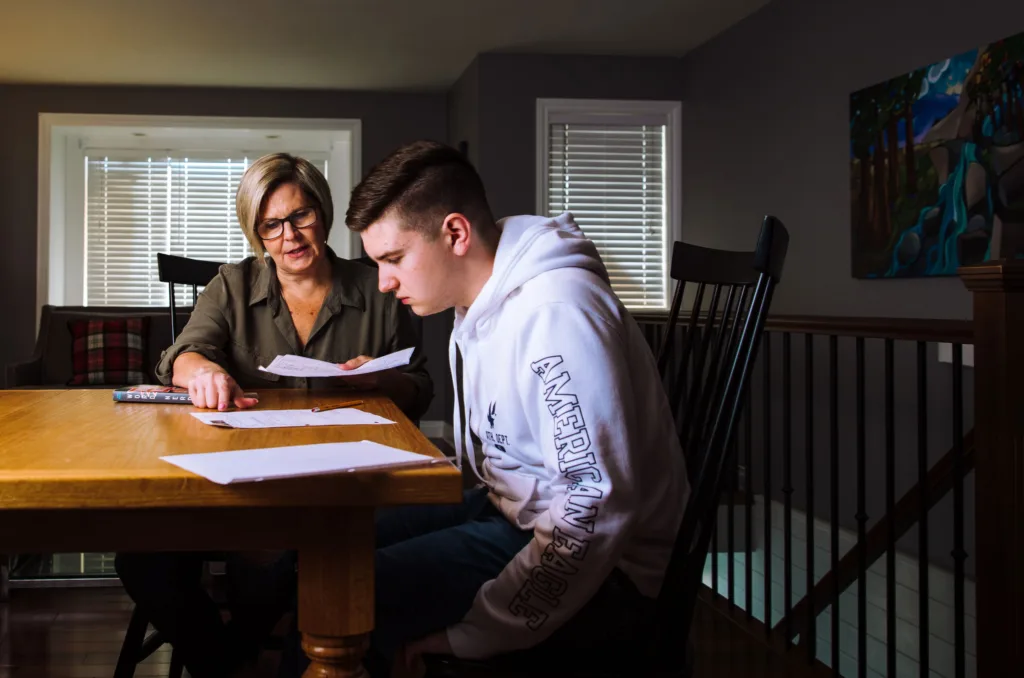
Navigating access to inclusive health care, education, jobs, housing, and supports and services over a lifetime can be challenging. These experiences provide a unique understanding of the barriers that exist within systems and help identify what changes are needed. Inclusion BC recognizes the importance of ‘lived experience’ and deeply values these perspectives and experiences.
Lived experience means having direct, personal experience with something and being able to share directly from that perspective. The term is used to describe knowledge that comes from real-life realities. This type of knowledge cannot be learned in school or through a job. People with lived experience are essential in decision-making processes and in shaping policies, programs, and services that impact them. That is why Inclusion BC is committed to centering lived experience in all areas of its work, to build a more inclusive and equitable society.
Teaming up to write this piece are Chelsea and Lisa.
Chelsea is a member of the Board of Inclusion BC and serves as the Chair of Inclusion BC’s Self Advocacy Advisory Committee. As an adult accessing services and a provincial leader learning from peers throughout BC, her lived experience fuels her advocacy. Chelsea works to improve systems by addressing issues including:
- disability poverty,
- inequities in rural and remote communities,
- health care, and
- inclusion and belonging.
Lisa is a Social Worker who works as a Policy Analyst with Inclusion BC. Her work is informed by lived experience and focuses on advancing human rights, equity, and access to services. Lisa has expertise in the intersection of disability and 2SLGBTQIA+ identity, as well as the barriers faced by people experiencing mental health and substance use challenges, poverty, and homelessness.
Together, to promote rights and address key issues impacting the disability community, Chelsea and Lisa have:
- developed position statements,
- met with MLAs and MPs,
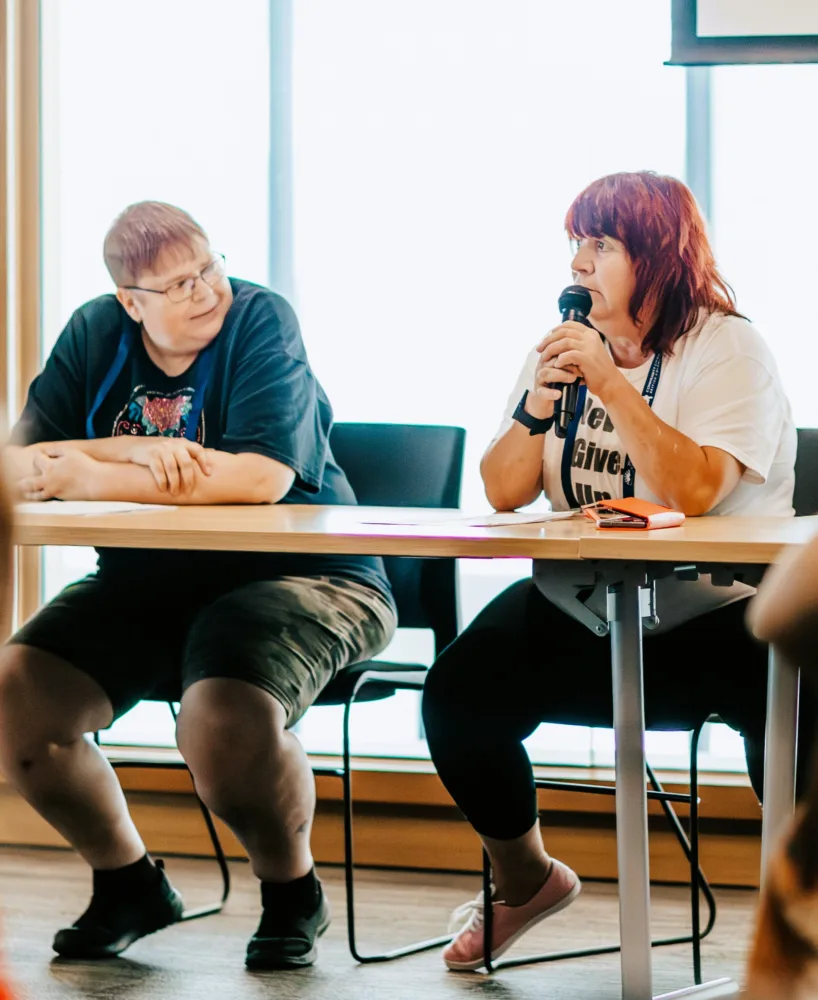
- presented on a panel for income security, and
- advocated for improvements to the Persons with Disabilities (PWD) Program and the Canada Disability Benefit (CDB).
They are also collaborating to develop Inclusion BC’s Accessibility Plan. These are just some of the ways that lived experience is an important part of the systems-level work done by Inclusion BC.
People with lived experience belong in key roles with decision-making power. For this to happen effectively, respect, collaboration and meeting people’s accessibility needs are important practices. Lived experience helps ensure that ideas and actions aimed at improving people’s lives are guided by those who have the expertise to understand what is truly needed.
Inclusion BC continues to learn from and be guided by the experiences and perspectives of people with lived experience. This approach is at the heart of Inclusion BC’s work. It reflects people’s real needs and priorities, strengthening lasting change in communities across BC.
Share this with your network: